
Lemongrass
A tall, scented grass that smells of lemon peel when you crush it. Lemongrass came into Indian cups from the kitchens of Kerala and the North-East, and in Maharashtra it is simply gavati chaha — "grass tea".
- Settles Kapha
- Settles Vata
- Can raise Pitta
How Ayurveda reads lemongrass
- Rasa · taste
- Pungent, bitter (kaṭu, tikta)
- Guṇa · nature
- Light, dry, sharp (laghu, rūkṣa, tīkṣṇa)
- Vīrya · potency
- Heating (uṣṇa)
- Vipāka · after digestion
- Pungent (kaṭu)
- Part used
- Leaf
Reviewed by the Vapika team.
In the tradition
Lemongrass is newer to the Ayurvedic texts than the other herbs in this library. A grass called bhūtṛṇa is described in the Nighaṇṭus, and is usually read as lemongrass or a near relative.
In everyday India it is a folk herb: gavati chaha in Maharashtra, sera in the North-East, and a garden plant in Kerala grown by the kitchen door.
How Ayurveda reads it
Lemongrass is pungent and bitter, light, dry and sharp, and heating, though its fresh scent makes it feel cooler than it is. It is described as settling Kapha and Vata, and able to raise Pitta in strong cups.
In the Indian kitchen
A stalk bruised and simmered in chai in the monsoon; leaves steeped on their own as gavati chaha; and in the curries and broths of the North-East and Kerala.
How we use it
We use cut, dried lemongrass leaf in our teas, where it brings brightness — often beside hibiscus, mint or ginger. It brews well hot, and makes a good iced tea.
Lemongrass in our blends
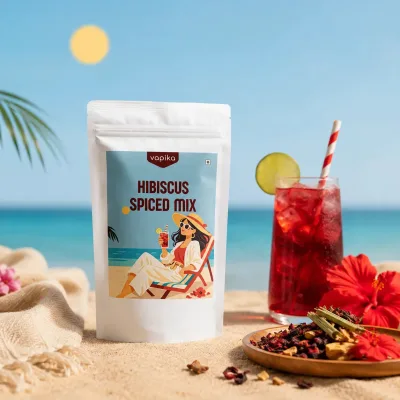 The lead herb
Hibiscus Lemongrass Kahwa
₹290
The lead herb
Hibiscus Lemongrass Kahwa
₹290
 The lead herb
Masala Green Tea
₹290
The lead herb
Masala Green Tea
₹290
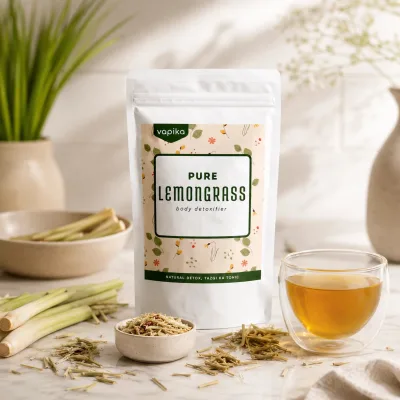 The lead herb
Lemon Grass Leaf Flakes
₹100
The lead herb
Lemon Grass Leaf Flakes
₹100
 The lead herb
Lemongrass Mint Kahwa
₹190
The lead herb
Lemongrass Mint Kahwa
₹190
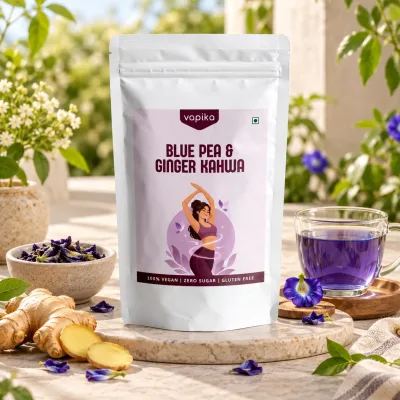 Supporting
Blue Pea & Ginger Kahwa
₹690
Supporting
Blue Pea & Ginger Kahwa
₹690
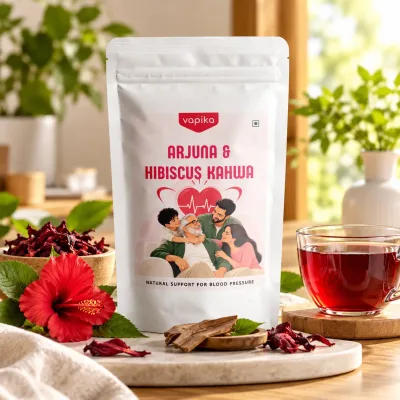 Supporting
Arjuna & Hibiscus Kahwa
₹390
Supporting
Arjuna & Hibiscus Kahwa
₹390
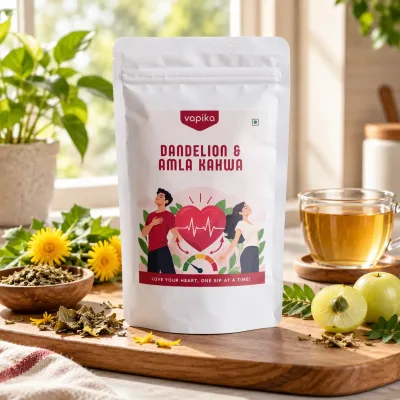 Supporting
Dandelion & Mulethi Kahwa
₹450
Supporting
Dandelion & Mulethi Kahwa
₹450
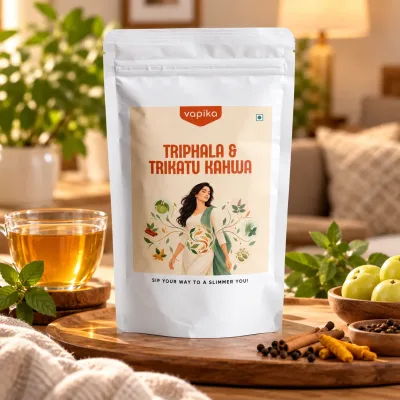 Supporting
Garcinia & Trikatu Kahwa
₹690
Supporting
Garcinia & Trikatu Kahwa
₹690
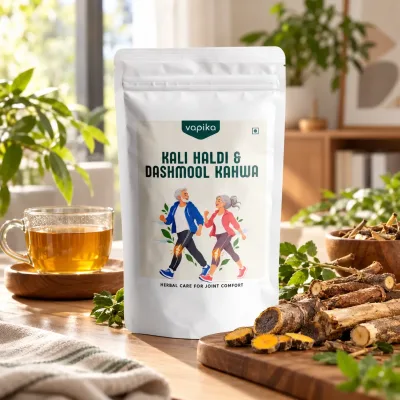 Supporting
Kali Haldi & Dashmool Kahwa
₹450
Supporting
Kali Haldi & Dashmool Kahwa
₹450
From the texts: Bhāvaprakāśa Nighaṇṭu (Bhūtṛṇa).
For learning, not diagnosis. If you are pregnant, nursing or on medication, please speak to your doctor first.