
Mulethi
A woody root that tastes of honey. The Sanskrit name means "sweet stick", and mulethi is what gives a blend its rounded, lingering sweetness without any sugar at all.
- Settles Vata
- Settles Pitta
- Can raise Kapha
How Ayurveda reads mulethi
- Rasa · taste
- Sweet (madhura)
- Guṇa · nature
- Heavy, unctuous (guru, snigdha)
- Vīrya · potency
- Cooling (śīta)
- Vipāka · after digestion
- Sweet (madhura)
- Part used
- Root
Reviewed by the Vapika team.
In the tradition
Yaṣṭimadhu — "sweet stick" — is one of the most used roots in the classical texts. Caraka lists it in several of his groups of fifty herbs, and it turns up in a great many formulations, often to sweeten and soften them. A stick of mulethi to chew on is an old grandmother's habit across North India.
How Ayurveda reads it
Mulethi is sweet in taste and after digestion, heavy and unctuous, and cooling. It is described as settling Vata and Pitta, and, being heavy and sweet, able to raise Kapha. It is counted among the rasāyana, the herbs of renewal.
It is said to be good for the voice (svarya) and the complexion (varṇya).
In the Indian kitchen
Not a cooking spice. Mulethi is chewed as a stick, or simmered into kadha and herbal teas, where a little sweetens the whole pot.
How we use it
We use cut mulethi root in our kahwas and teas — usually in small amounts, for sweetness and body. If a blend tastes sweeter than its ingredients suggest, this is why.
Mulethi in our blends
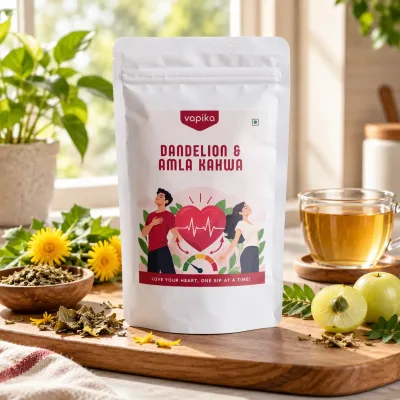 The lead herb
Dandelion & Mulethi Kahwa
₹450
The lead herb
Dandelion & Mulethi Kahwa
₹450
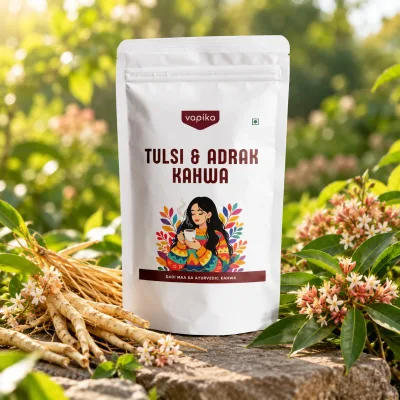 The lead herb
Tulsi & Adrak Kahwa
₹290
The lead herb
Tulsi & Adrak Kahwa
₹290
 Supporting
Desi Tea - Garm Jal
₹290
Supporting
Desi Tea - Garm Jal
₹290
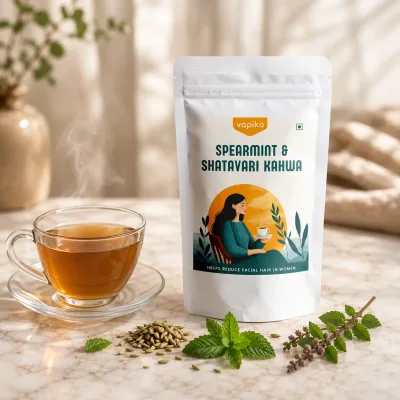 Supporting
Spearmint & Shatavari Kahwa
₹490
Supporting
Spearmint & Shatavari Kahwa
₹490
 Supporting
Lakadong Haldi Doodh Mix
₹290
Supporting
Lakadong Haldi Doodh Mix
₹290
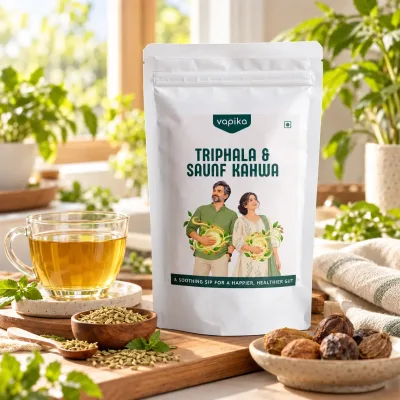 Supporting
Triphala & Saunf Kahwa
₹560
Supporting
Triphala & Saunf Kahwa
₹560
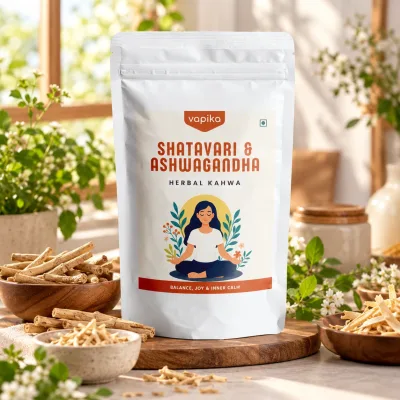 Supporting
Shatavari & Ashwagandha Kahwa for Women
₹550
Supporting
Shatavari & Ashwagandha Kahwa for Women
₹550
 Supporting
Masala Green Tea
₹290
Supporting
Masala Green Tea
₹290
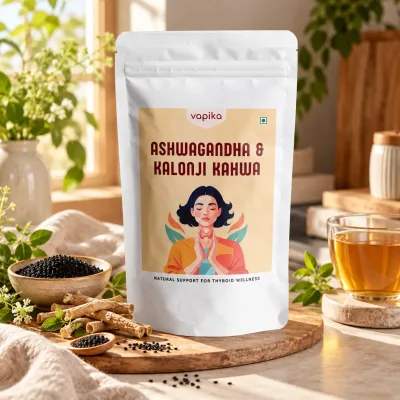 Supporting
Ashwagandha & Trikatu Kahwa
₹590
Supporting
Ashwagandha & Trikatu Kahwa
₹590
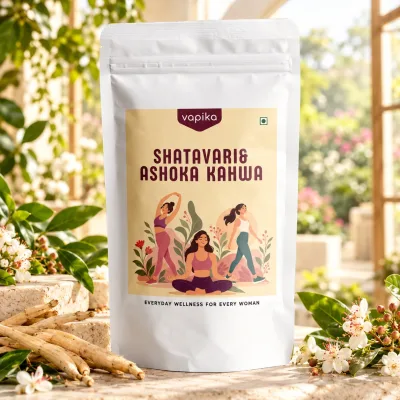 Supporting
Shatavari & Ashoka Kahwa
₹490
Supporting
Shatavari & Ashoka Kahwa
₹490
From the texts: Bhāvaprakāśa Nighaṇṭu, Harītakyādi varga; Caraka Saṃhitā, Sūtrasthāna 4 (among the jīvanīya and sandhānīya groups).
For learning, not diagnosis. If you are pregnant, nursing or on medication, please speak to your doctor first.