
Green tea
Tea leaf steamed or pan-fired soon after picking, so it stays green. Lighter and grassier than black tea, with less caffeine.
How Ayurveda reads green tea
- Part used
- Leaf, unfermented
Reviewed by the Vapika team.
In the tradition
Tea is not an Ayurvedic herb. The tea plant grows wild in the hills of the north-east, and the Singpho people of Assam drank it long before the British planted it in the 1830s. Green tea has been made in China and Japan for over a thousand years; in India it is a newer habit, though Kashmiri kahwa has always been brewed on green tea.
Black and green tea are the same plant. Green tea is heated soon after picking so the leaf doesn't oxidise; black tea is left to oxidise first.
How we read it
Because the classical texts don't describe tea, this page gives it no rasa, guṇa or vīrya. By taste, green tea is bitter and astringent.
How to brew it
Never with boiling water. Let the kettle stand for a minute, and steep for 2–3 minutes only. Hotter or longer brings out bitterness.
How we use it
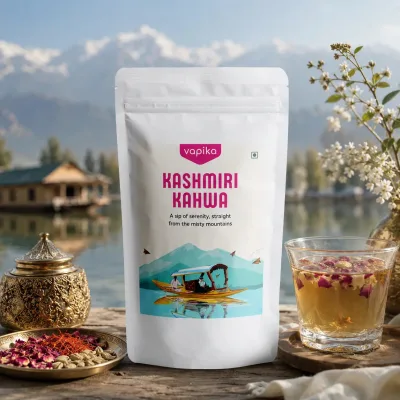
We sell Everyday Green Tea and Darjeeling Himalayan Green Tea, and use green tea as the base of our Masala Green Tea and Kashmiri Kahwa.



From the texts: Tea is not described in the classical Ayurvedic texts.
For learning, not diagnosis. If you are pregnant, nursing or on medication, please speak to your doctor first.