
Black pepper
The spice that sent ships across the world. Kali mirch from the Malabar coast is sharp, hot and quick, and a few crushed corns wake up a whole pot.
- Settles Kapha
- Settles Vata
- Can raise Pitta
How Ayurveda reads black pepper
- Rasa · taste
- Pungent (kaṭu)
- Guṇa · nature
- Light, sharp, dry (laghu, tīkṣṇa, rūkṣa)
- Vīrya · potency
- Heating (uṣṇa)
- Vipāka · after digestion
- Pungent (kaṭu)
- Part used
- Fruit (peppercorn)
Reviewed by the Vapika team.
In the tradition
Long before chilli reached India in the sixteenth century, marica was where the heat in Indian food came from. It is one of the three pungents of trikaṭu, the most used spice group in the classical texts, with dry ginger and long pepper (pippalī).
Pepper was black gold to the Romans and the reason Vasco da Gama sailed for Calicut.
How Ayurveda reads it
Kali mirch is pungent, light, sharp and dry, and heating, with a pungent after-digestion effect. It is described as settling Kapha strongly, and Vata to a degree, and as raising Pitta.
It is classed as dīpana — kindling agni — and is often added to other herbs to carry them, which the tradition calls yogavāhī.
In the Indian kitchen
Pepper goes into rasam, pongal, garam masala, haldi doodh, and chai masala. In winter a few crushed corns go into the chai with ginger and tulsi.
How we use it
We use whole black pepper, crushed, in our kahwas, churnas and chai blends. It is almost always alongside turmeric or ginger.
Black pepper in our blends
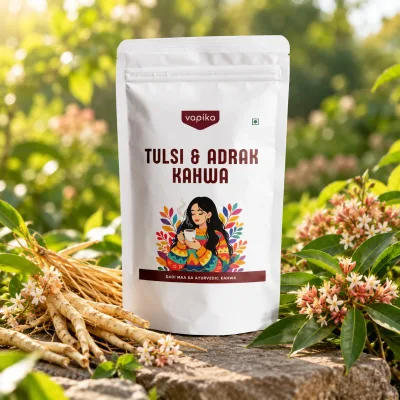

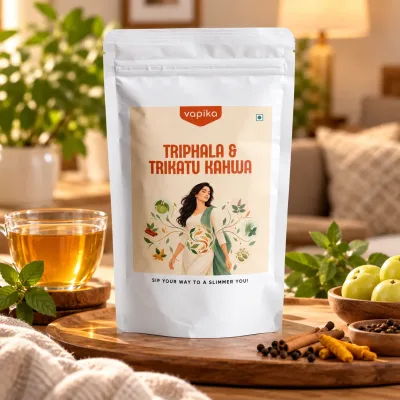



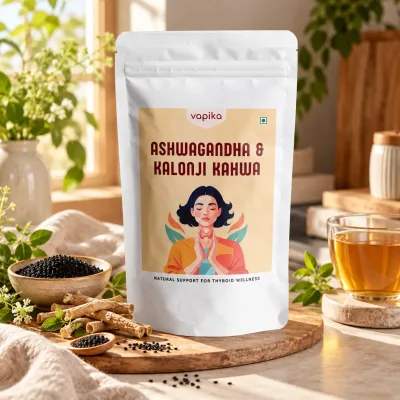
From the texts: Bhāvaprakāśa Nighaṇṭu, Harītakyādi varga. One of the three of trikaṭu, with dry ginger and long pepper.
For learning, not diagnosis. If you are pregnant, nursing or on medication, please speak to your doctor first.