
Ashwagandha
A pale, earthy root whose Sanskrit name means "the smell of a horse". Ashwagandha is one of the best-known rasayana herbs of the tradition — the herbs of renewal, taken over a season.
- Settles Vata
- Settles Kapha
- Can raise Pitta
How Ayurveda reads ashwagandha
- Rasa · taste
- Bitter, astringent, sweet (tikta, kaṣāya, madhura)
- Guṇa · nature
- Light, unctuous (laghu, snigdha)
- Vīrya · potency
- Heating (uṣṇa)
- Vipāka · after digestion
- Sweet (madhura)
- Part used
- Root
Reviewed by the Vapika team.
In the tradition
Aśvagandhā — "the smell of a horse" — is said to be named for the scent of the fresh root, and, by some teachers, for the strength of a horse it is meant to give. It is one of the herbs Caraka lists as balya (giving strength) and bṛṃhaṇa (nourishing).
The root was traditionally taken with warm milk and ghee, through the winter.
How Ayurveda reads it
Ashwagandha is bitter, astringent and sweet, light and unctuous, and heating, with a sweet after-digestion effect. It is described as settling Vata above all, and Kapha, and as able to raise Pitta.
It is counted among the rasāyana, the herbs of renewal, taken with patience over weeks rather than for a quick effect.
In the Indian kitchen
Not a kitchen herb. Ashwagandha is taken as a powder in warm milk, often with a little ghee, jaggery or mishri — in the evening, in winter.
How we use it
We use ashwagandha root powder in some of our churnas and evening blends, in modest amounts.
Ashwagandha in our blends



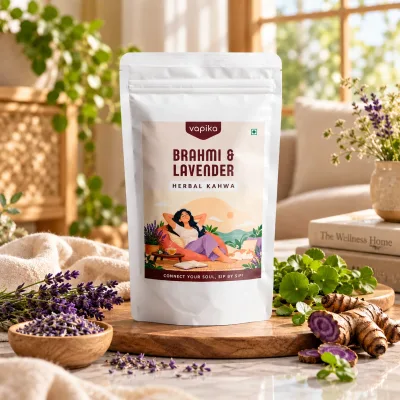
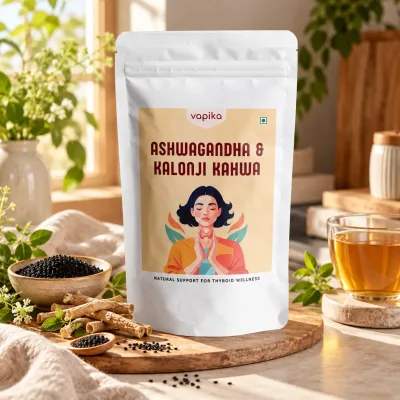
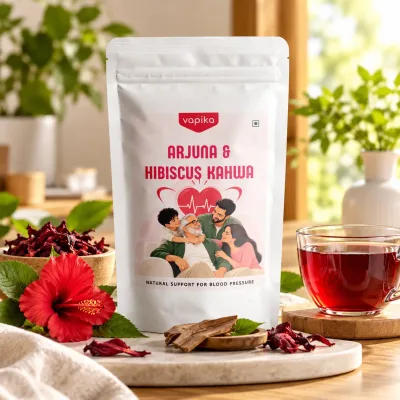
From the texts: Bhāvaprakāśa Nighaṇṭu, Guḍūcyādi varga; Caraka Saṃhitā, Sūtrasthāna 4 (among the bṛṃhaṇīya and balya groups).
For learning, not diagnosis. If you are pregnant, nursing or on medication, please speak to your doctor first.