
Amla
A hard, sour, pale-green fruit that ripens in the cool months. Amla holds five of the six tastes, and the texts call it Dhatri — "the nurse" — for the way it looks after those who take it.
- Settles Pitta
- Settles Vata
- Settles Kapha
How Ayurveda reads amla
- Rasa · taste
- Five tastes, sour foremost — all but salt (amla pradhāna, lavaṇa varjita)
- Guṇa · nature
- Heavy, dry (guru, rūkṣa)
- Vīrya · potency
- Cooling (śīta)
- Vipāka · after digestion
- Sweet (madhura)
- Part used
- Fruit
Reviewed by the Vapika team.
In the tradition
Āmalakī is perhaps the most praised fruit in the classical texts. Caraka opens his chapter on renewal with formulations built on it, and the best-known of them, cyavanaprāśa, is still made in almost every Indian home's memory. With harītakī and vibhītakī it is one of the three fruits of triphalā.
Its other name, Dhātrī, means a nurse or foster-mother. In Kartik, amla trees are worshipped, and families eat a meal in their shade (Amla Navami).
How Ayurveda reads it
Amla holds five of the six tastes — every one but salt — with sour the strongest. It is heavy and dry, cooling, with a sweet after-digestion effect. It is described as balancing all three doshas, and as the sour food that does not aggravate Pitta, which almost no other sour food can claim.
It is counted among the foremost rasāyana.
In the Indian kitchen
Amla is pickled (amla ka achaar), candied (murabba), dried with salt as amla supari, made into chutney, and juiced in winter. The fresh fruit is in season from about November to February.
How we use it
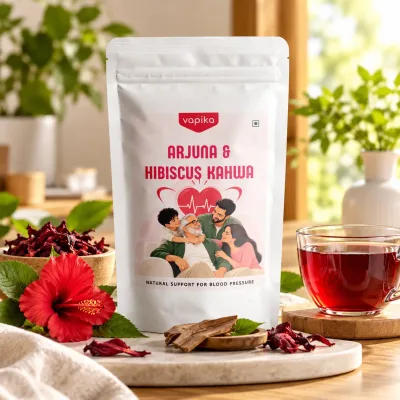
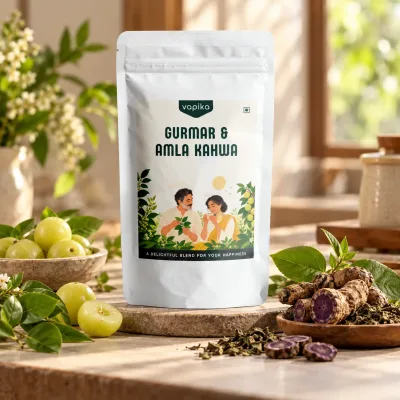
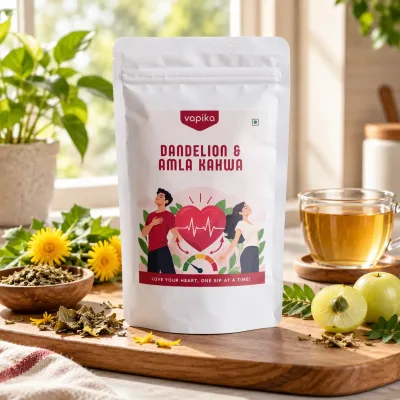
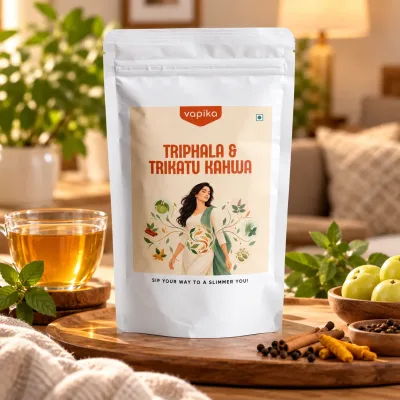
We use dried amla, cut or powdered, in our churnas and some of our teas. It brings a clean sourness that lifts the sweeter herbs around it.

From the texts: Bhāvaprakāśa Nighaṇṭu, Harītakyādi varga; Caraka Saṃhitā, Cikitsāsthāna 1 (Āmalaka rasāyana). One of the three fruits of triphalā.
For learning, not diagnosis. If you are pregnant, nursing or on medication, please speak to your doctor first.