
Turmeric
Golden, earthy and a little bitter. Haldi is in almost every Indian pot, on the skin of every bride before her wedding, and in the warm milk your mother made you drink.
- Settles Kapha
- Settles Vata
- Can raise Pitta
How Ayurveda reads turmeric
- Rasa · taste
- Bitter, pungent (tikta, kaṭu)
- Guṇa · nature
- Dry, light (rūkṣa, laghu)
- Vīrya · potency
- Heating (uṣṇa)
- Vipāka · after digestion
- Pungent (kaṭu)
- Part used
- Rhizome
Reviewed by the Vapika team.
In the tradition
Haridrā means "the yellow one"; its other name, Niśā, means "night". Turmeric is in the haldi ceremony before a wedding, on the threshold of a new home, in the tilak. It is one of very few spices that is as much a part of ritual as of the kitchen.
Caraka lists it in several of his groups of herbs.
How Ayurveda reads it
Haldi is bitter and pungent, dry and light, and heating, with a pungent after-digestion effect. It is described as settling Kapha and Vata; its bitterness is kind to Pitta, but its heat can raise it in quantity.
It is classed as varṇya, good for the complexion.
In the Indian kitchen
A pinch goes into nearly every dal and sabzi, into pickles, and into haldi doodh — turmeric milk with a little black pepper and ghee — on winter nights. Fresh turmeric root is pickled with lemon and ginger in the winter months.
How we use it
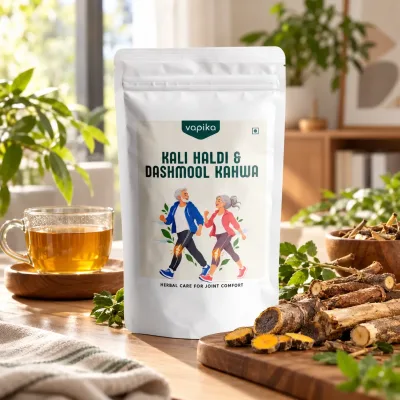
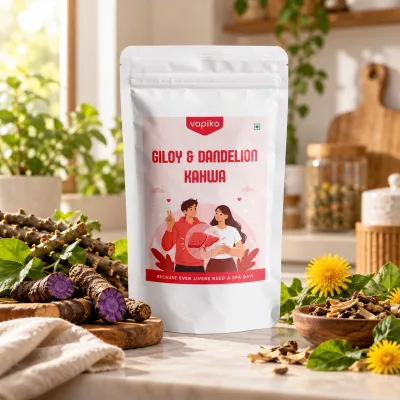
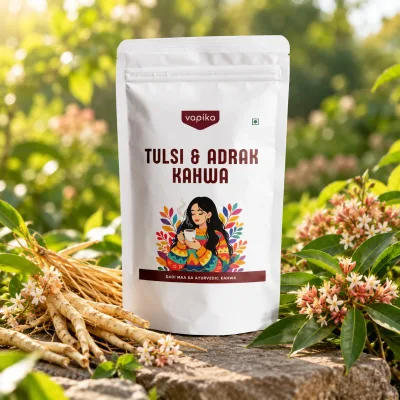
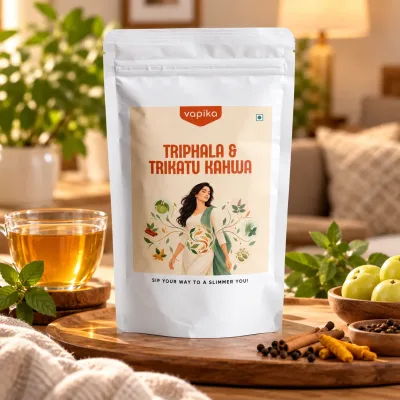
We use dried turmeric root, ground or cut, in our churnas and some of our teas — usually with black pepper beside it, as the kitchen always has. Our Lakadong Haldi Doodh Mix is made with Lakadong, a deep-coloured variety of this same plant from the Meghalaya hills. Kali haldi, black turmeric, is a different plant with its own page.
Turmeric in our blends


From the texts: Bhāvaprakāśa Nighaṇṭu, Harītakyādi varga; Caraka Saṃhitā, Sūtrasthāna 4 (among the lekhanīya and kuṣṭhaghna groups).
For learning, not diagnosis. If you are pregnant, nursing or on medication, please speak to your doctor first.