
Triphala
Three fruits in equal parts: haritaki, bibhitaki and amla. Triphala is the best-known formula in Ayurveda, and one of the few said to suit all three doshas.
- Settles Vata
- Settles Pitta
- Settles Kapha
How Ayurveda reads triphala
- Rasa · taste
- All but salt; astringent leads (lavaṇa-varjita, kaṣāya-pradhāna)
- Guṇa · nature
- Light, dry (laghu, rūkṣa)
- Vīrya · potency
- Not hot (anuṣṇa)
- Vipāka · after digestion
- Sweet (madhura)
- Part used
- Fruit rind, dried
Reviewed by the Vapika team.
In the tradition
Tri-phalā, "three fruits": haritaki, bibhitaki and amla, dried and ground in equal parts. It is the formula most Indian households have heard of, often taken at night with warm water. Caraka describes it as a rasāyana to be taken daily over long periods.
Each of the three fruits has its own page in the library.
How Ayurveda reads it
Between them the three fruits carry five of the six tastes, all but salt, with astringent the strongest. The formula is light and dry, not hot in potency and sweet after digestion. Each fruit leans to one dosha: haritaki to Vata, amla to Pitta, bibhitaki to Kapha. That is why triphala is described as settling all three.
In the Indian kitchen
Triphala is not a cooking ingredient. It is taken as a powder in warm water, or soaked overnight and the water drunk in the morning. Triphala water is also used to wash the eyes in some traditions; we don't advise it without a vaidya.
How we use it
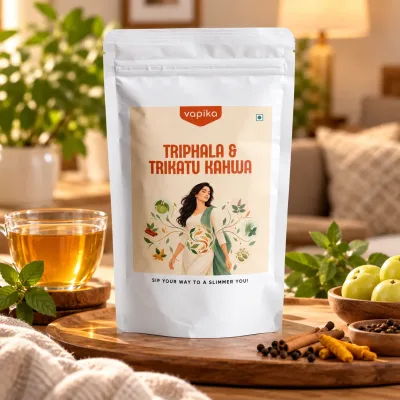
We use triphala powder in our Triphala & Saunf and Garcinia & Trikatu kahwas, where kitchen spices balance its bitterness.
Triphala in our blends

From the texts: Caraka Saṃhitā, Cikitsāsthāna 1 (triphalā rasāyana); Bhāvaprakāśa Nighaṇṭu, Harītakyādi varga.
For learning, not diagnosis. If you are pregnant, nursing or on medication, please speak to your doctor first.