
Shankhpushpi
A small creeping plant whose white or pale flowers are shaped like a conch shell. It is one of the four herbs Caraka names for the mind.
- Settles Vata
- Settles Pitta
- Settles Kapha
How Ayurveda reads shankhpushpi
- Rasa · taste
- Bitter, astringent (tikta, kaṣāya)
- Guṇa · nature
- Unctuous, slimy (snigdha, picchila)
- Vīrya · potency
- Cooling (śīta)
- Vipāka · after digestion
- Sweet (madhura)
- Part used
- Whole herb
Reviewed by the Vapika team.
In the tradition
Śaṅkha-puṣpī, "conch flower", for the shape of its small trumpet flowers. Caraka names it among the four medhya rasāyana, the herbs he gives for the mind and memory, with brahmi (as maṇḍūkaparṇī), mulethi and giloy.
Which plant the texts meant is still debated. Convolvulus prostratus is the usual shankhpushpi of north India; Evolvulus alsinoides and a white Clitoria ternatea are also sold under the name in different regions.
How Ayurveda reads it
Shankhpushpi is read as bitter and astringent, unctuous, and cooling, settling all three doshas.
In the Indian kitchen
Shankhpushpi is not a kitchen herb. It is taken as a powder, a syrup or a fresh paste.
How we use it
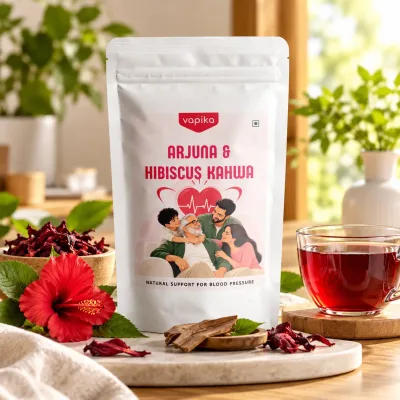
We use dried whole shankhpushpi in our Arjuna & Hibiscus Kahwa and Desi Tea – Garm Jal, where it adds a mild, grassy note.
Shankhpushpi in our blends

From the texts: Caraka Saṃhitā, Cikitsāsthāna 1.3 (among the four medhya rasāyana); Bhāvaprakāśa Nighaṇṭu, Guḍūcyādi varga.
For learning, not diagnosis. If you are pregnant, nursing or on medication, please speak to your doctor first.