
Punarnava
A creeping wayside weed with small pink flowers, that dries out every summer and springs green again with the rains. Its name means "renewed again".
- Settles Kapha
- Settles Vata
How Ayurveda reads punarnava
- Rasa · taste
- Sweet, bitter, astringent (madhura, tikta, kaṣāya)
- Guṇa · nature
- Light, dry (laghu, rūkṣa)
- Vīrya · potency
- Heating (uṣṇa)
- Vipāka · after digestion
- Sweet (madhura)
- Part used
- Root
Reviewed by the Vapika team.
In the tradition
Punar-navā, "new again", for the way the plant withers in the summer and returns with the first monsoon rain. Caraka places it among the vayaḥsthāpana herbs, those that sustain youth, beside amla, haritaki and giloy.
The texts describe a red and a white kind. The red, Boerhavia diffusa, is the one most used today.
How Ayurveda reads it
Punarnava is sweet, bitter and astringent, light and dry, and heating. It is described as settling Kapha and Vata, and as rasāyana.
In the Indian kitchen
The leaves are cooked as a green, sathi or punarnava saag, in Bengal, Odisha and parts of central India, especially in the monsoon.
How we use it
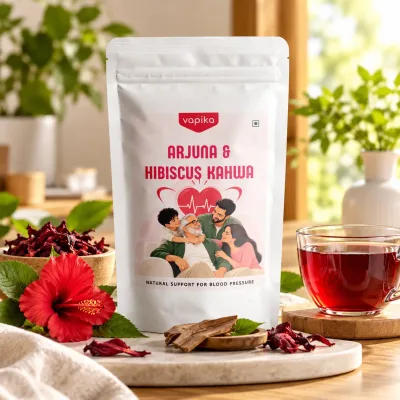
We use the dried root in our Arjuna & Hibiscus Kahwa.
Punarnava in our blends
From the texts: Caraka Saṃhitā, Sūtrasthāna 4 (vayaḥsthāpana); Bhāvaprakāśa Nighaṇṭu, Guḍūcyādi varga.
For learning, not diagnosis. If you are pregnant, nursing or on medication, please speak to your doctor first.