
Kali haldi
A different plant from everyday yellow haldi (and from Lakadong, which is a variety of yellow haldi): its rhizome is blue-black inside. It is more pungent than yellow turmeric and smells of camphor.
How Ayurveda reads kali haldi
- Rasa · taste
- Pungent, bitter (kaṭu, tikta), by taste
- Guṇa · nature
- Light, dry (laghu, rūkṣa)
- Vīrya · potency
- Heating (uṣṇa)
- Part used
- Rhizome
Reviewed by the Vapika team.
In the tradition
Kali haldi grows in the forests of central India, Odisha, Bengal and the north-east. It is a ritual plant in parts of Bengal and Madhya Pradesh, and is used in tribal folk medicine. It isn't clearly identified in the classical texts, so this page gives only a reading by taste.
Wild kali haldi is under pressure from over-collection.
How we read it
By taste, kali haldi is pungent and bitter, light and dry, and heating, like a sharper yellow haldi.
In the Indian kitchen
It isn't a cooking spice. In some regions the fresh rhizome is ground into a paste and applied, rather than eaten.
How we use it
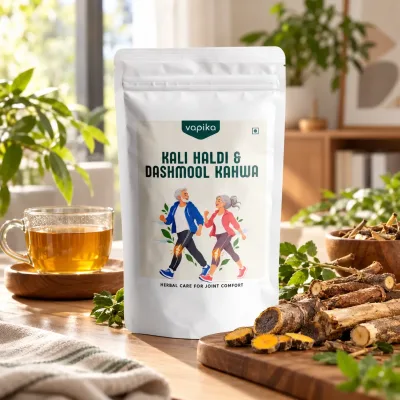
We use the dried rhizome in our Kali Haldi & Dashmool Kahwa, where it gives a deep, camphor-like note.
Kali haldi in our blends
From the texts: Not clearly described in the classical Ayurvedic texts; known in the folk medicine of central and north-east India.
For learning, not diagnosis. If you are pregnant, nursing or on medication, please speak to your doctor first.