
Jasmine
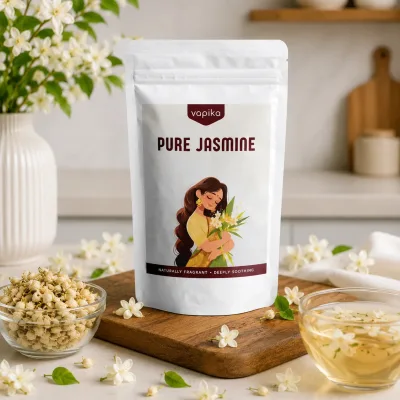
The white, night-scented flower of Indian gardens, temples and hair. Dried, it makes a pale cup with a strong, sweet fragrance.
- Settles Pitta
- Settles Kapha
How Ayurveda reads jasmine
- Rasa · taste
- Bitter, astringent (tikta, kaṣāya)
- Guṇa · nature
- Light, soft (laghu, mṛdu)
- Vīrya · potency
- Heating (uṣṇa)
- Vipāka · after digestion
- Pungent (kaṭu)
- Part used
- Flower
Reviewed by the Vapika team.
In the tradition
Two jasmines grow in Indian gardens. Chameli (jātī, Jasminum grandiflorum) has five long, star-like petals and grows as a climber. Mogra (mallikā, J. sambac) is the round, many-petalled flower of the gajra in the hair and of Madurai's famous malli. Mogra is the usual jasmine of jasmine tea.
How Ayurveda reads it
The texts read jātī as bitter and astringent, light and soft, and describe it as settling Pitta and Kapha.
In the Indian kitchen
Jasmine is a flower for the gajra and the temple more than the kitchen, though jasmine-scented rice and sweets are made in the south, and jasmine water flavours some sharbats.
How we use it
We sell dried jasmine flowers on their own, and use them in our Methi & Dhania Kahwa for a soft floral finish. A few flowers in green tea make jasmine tea at home.
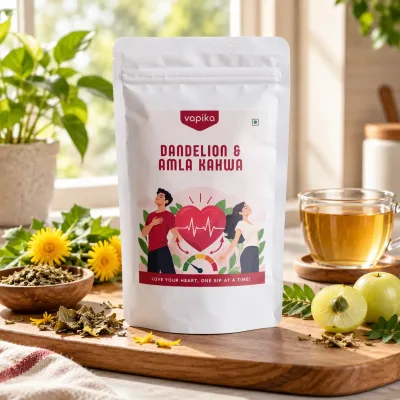
Jasmine in our blends
From the texts: Bhāvaprakāśa Nighaṇṭu, Puṣpa varga (jātī, mallikā).
For learning, not diagnosis. If you are pregnant, nursing or on medication, please speak to your doctor first.