
Hibiscus
The red flower offered to the goddess every morning, and the tart, ruby-red cup it makes. Hibiscus brews in minutes and is as good iced as hot.
- Settles Pitta
- Settles Kapha
- Can raise Vata
How Ayurveda reads hibiscus
- Rasa · taste
- Astringent, sweet (kaṣāya, madhura)
- Guṇa · nature
- Light, unctuous (laghu, snigdha)
- Vīrya · potency
- Cooling (śīta)
- Vipāka · after digestion
- Sweet (madhura)
- Part used
- Flower
Reviewed by the Vapika team.
In the tradition
Japā, the red hibiscus, is the flower of Devi and of Ganesha. In Bengal and across the east it is the flower of Kali, strung into garlands of 108. In the south, gudhal flowers are crushed into oil for the hair.
Two plants are sold as hibiscus. Red gudhal (Hibiscus rosa-sinensis) is the temple flower and the one the classical texts describe as japā. Roselle (Hibiscus sabdariffa), lal ambadi in Marathi, is grown for its sour red calyces, and most hibiscus tea in the world is roselle.
How Ayurveda reads it
Japā is read as astringent and sweet, cooling, and settling Pitta and Kapha.
In the Indian kitchen
Roselle leaves make ambadi bhaji in Maharashtra and gongura pickle in Andhra, and its calyces go into sharbat and jam. Gudhal is a flower for the temple and the hair, and only recently for the teacup.
How we use it
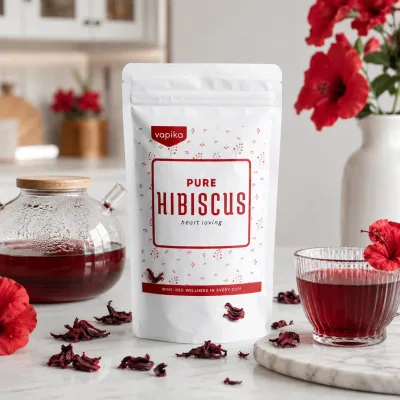
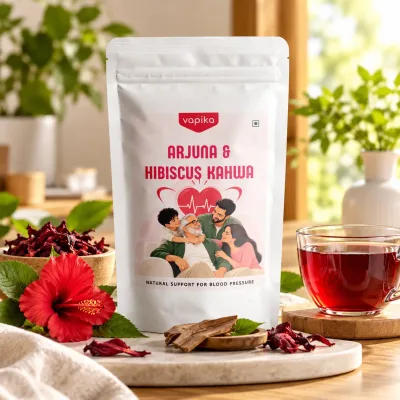
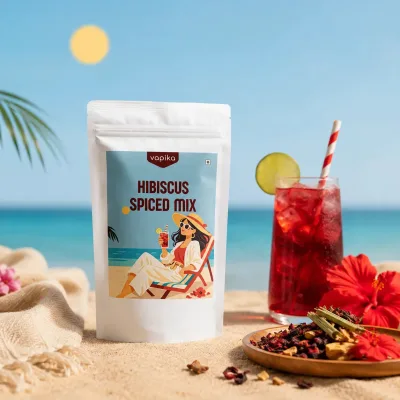
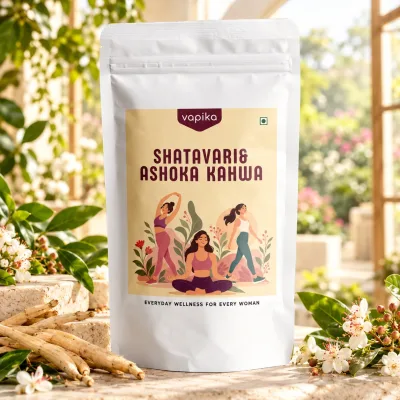
We use dried hibiscus flowers on their own, and in our Arjuna & Hibiscus, Shatavari & Ashoka and Hibiscus Lemongrass kahwas. They colour the water a deep ruby within a minute and give a tart, berry-like taste.
From the texts: Bhāvaprakāśa Nighaṇṭu, Puṣpa varga (japā).
For learning, not diagnosis. If you are pregnant, nursing or on medication, please speak to your doctor first.