
Haritaki
A hard, wrinkled, olive-sized fruit, and the first herb of Bhāvaprakāśa. The texts compare haritaki to a mother, for the care it gives.
- Settles Vata
- Settles Pitta
- Settles Kapha
How Ayurveda reads haritaki
- Rasa · taste
- All but salt; astringent leads (lavaṇa-varjita, kaṣāya-pradhāna)
- Guṇa · nature
- Light, dry (laghu, rūkṣa)
- Vīrya · potency
- Heating (uṣṇa)
- Vipāka · after digestion
- Sweet (madhura)
- Part used
- Fruit rind, dried
Reviewed by the Vapika team.
In the tradition
Bhāvaprakāśa begins its whole herbal with harītakī. It tells how a drop of amṛta fell from Indra's cup and grew into the tree, names seven kinds by their shape and where they grow, and says harītakī is like a mother to people. Its names Abhayā ("fearless") and Pathyā ("wholesome") carry the same regard.
How Ayurveda reads it
Haritaki carries five of the six tastes, all but salt, with astringent the strongest. It is light and dry, heating and sweet after digestion. It is described as settling all three doshas, above all Vata, and as a rasāyana.
In the Indian kitchen
Haritaki is not a cooking ingredient, though a small piece is still chewed after meals in some homes, and harad candies and murabba are sold in every old bazaar.
How we use it
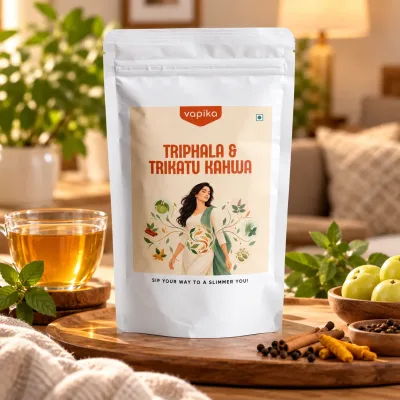
We use haritaki as one of the three fruits of the triphala in our Triphala & Saunf and Garcinia & Trikatu kahwas.
Haritaki in our blends

From the texts: Bhāvaprakāśa Nighaṇṭu, Harītakyādi varga (the first herb of the book, with its seven kinds); Caraka Saṃhitā, Cikitsāsthāna 1 (abhayā in rasāyana).
For learning, not diagnosis. If you are pregnant, nursing or on medication, please speak to your doctor first.