
Giloy
A climbing vine with heart-shaped leaves and a strongly bitter stem. The texts call it amṛtā, the nectar of immortality, and it is one of the few herbs said to settle all three doshas.
- Settles Vata
- Settles Pitta
- Settles Kapha
How Ayurveda reads giloy
- Rasa · taste
- Bitter, astringent (tikta, kaṣāya)
- Guṇa · nature
- Heavy, unctuous (guru, snigdha)
- Vīrya · potency
- Heating (uṣṇa)
- Vipāka · after digestion
- Sweet (madhura)
- Part used
- Stem
Reviewed by the Vapika team.
In the tradition
Guḍūcī is so important to Ayurveda that Bhāvaprakāśa opens a whole chapter of herbs with it. Its name Amṛtā comes from the story that drops of nectar fell to earth from the gods' battle with the demons, and giloy grew where they landed. Another name, Chinnaruhā, "she who grows back when cut", describes the vine: a cut stem hung on a tree puts out roots in the air and grows again.
Giloy that climbs a neem tree, neem-giloy, is valued above all, and traditional sellers still ask which tree a vine grew on.
How Ayurveda reads it
Giloy is bitter and astringent, heavy and unctuous, heating in potency and sweet after digestion. That rare mix is why it is described as settling all three doshas. Caraka lists it among the vayaḥsthāpana herbs, those that sustain youth, and it is one of the four medhya rasāyana when taken as a fresh juice.
In the Indian kitchen
Giloy is not a food. It is taken as a fresh juice of the stem, as a decoction, or as guḍūcī sattva, a white starch drawn from the stem.
How we use it
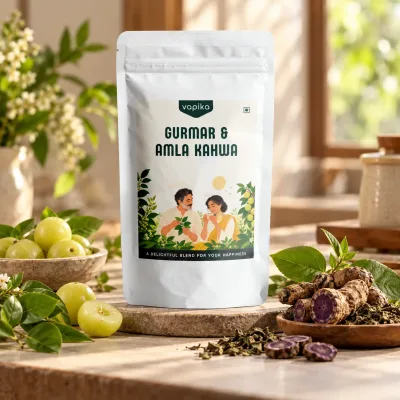
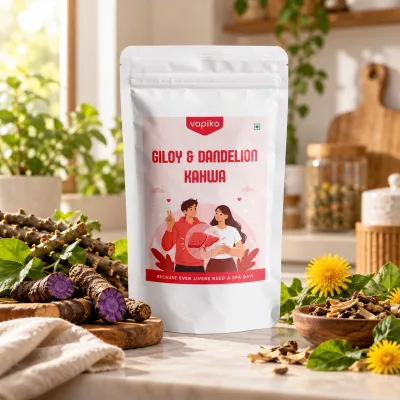
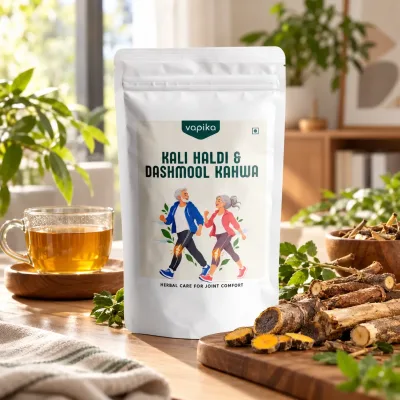
We use dried, cut giloy stem in our Gurmar & Amla, Giloy & Dandelion, Morning Mint Ginger and Kali Haldi & Dashmool blends. It is very bitter, so it is always balanced by sweeter and more aromatic herbs.

From the texts: Caraka Saṃhitā, Sūtrasthāna 4 (vayaḥsthāpana) and Sūtrasthāna 25 (agrya); Bhāvaprakāśa Nighaṇṭu, Guḍūcyādi varga (the first herb of its chapter).
For learning, not diagnosis. If you are pregnant, nursing or on medication, please speak to your doctor first.