
Brahmi
A small, fleshy creeping plant from the edges of ponds and paddy fields. Brahmi is bitter and cooling, and the texts name it after Brahma and Saraswati — the herb of a clear and steady mind.
- Settles Pitta
- Settles Kapha
- Settles Vata
How Ayurveda reads brahmi
- Rasa · taste
- Bitter, astringent, sweet (tikta, kaṣāya, madhura)
- Guṇa · nature
- Light (laghu)
- Vīrya · potency
- Cooling (śīta)
- Vipāka · after digestion
- Sweet (madhura)
- Part used
- Whole plant (aerial parts)
Reviewed by the Vapika team.
In the tradition
There is a long-running question over which plant is the "real" brahmi. Most of North India and most suppliers mean Bacopa monnieri, the small water plant; in parts of the south, and in some texts, brahmi is mandūkaparṇī — Centella asiatica, gotu kola. Both are described as medhya.
Caraka lists brahmi among the four medhya rasāyana, the renewing herbs of the mind.
How Ayurveda reads it
Brahmi is bitter, astringent and sweet, light, and cooling, with a sweet after-digestion effect. It is described as balancing all three doshas, and as especially kind to Pitta.
The tradition calls it medhya — good for the intellect: memory, focus and a settled mind.
In the Indian kitchen
Not much of a kitchen herb, though fresh brahmi leaves are eaten as a bitter green or chutney in Bengal and the south. It is mostly taken as a powder, with ghee or warm milk, or as a tea.
How we use it
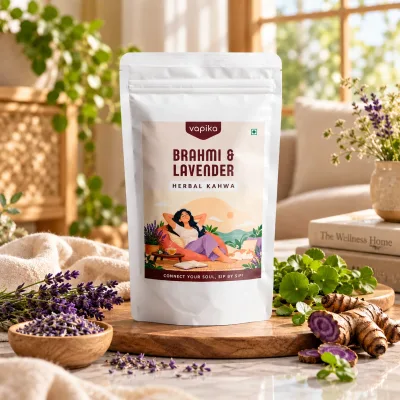
We use dried brahmi, cut or powdered, in our evening and study-time blends. It is bitter; our blends pair it with sweeter herbs.




From the texts: Bhāvaprakāśa Nighaṇṭu, Guḍūcyādi varga; Caraka Saṃhitā, Cikitsāsthāna 1 (among the medhya rasāyana).
For learning, not diagnosis. If you are pregnant, nursing or on medication, please speak to your doctor first.