
Arjuna
The pale, smooth bark of a great riverside tree, named for the hero of the Mahābhārata. Earthy and astringent, it is one of the best-known barks in Ayurveda.
- Settles Kapha
- Settles Pitta
- Can raise Vata
How Ayurveda reads arjuna
- Rasa · taste
- Astringent (kaṣāya)
- Guṇa · nature
- Light, dry (laghu, rūkṣa)
- Vīrya · potency
- Cooling (śīta)
- Vipāka · after digestion
- Pungent (kaṭu)
- Part used
- Bark
Reviewed by the Vapika team.
In the tradition
The arjun tree grows tall along rivers and streams across central and south India, its bark peeling in smooth, pale sheets. Arjuna means bright or white, for that bark. It is also the name of the Pāṇḍava hero, and the tree shares his other names, Pārtha and Kakubha.
The bark peels off naturally each year, and good collectors take only what the tree sheds.
How Ayurveda reads it
Arjuna is astringent, light and dry, and cooling. It is described as settling Kapha and Pitta. Bhāvaprakāśa calls it hṛdya, and the bark has been boiled in milk as kṣīrapāka since classical times.
In the Indian kitchen
Arjuna isn't a kitchen herb. It is taken as a decoction, or simmered in milk.
How we use it
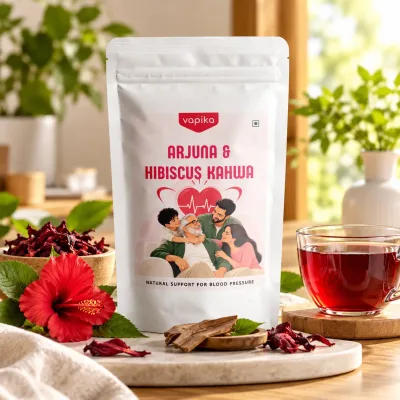
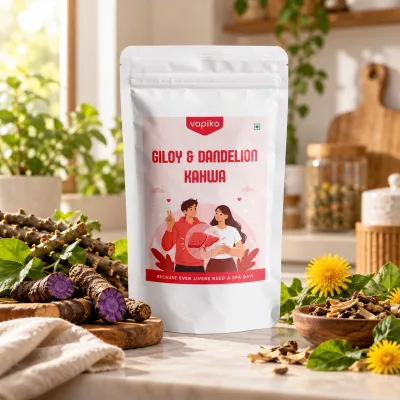
We use the dried, cut bark, the arjun chaal of the pack, in our Arjuna & Hibiscus and Giloy & Dandelion kahwas, and in Desi Tea – Garm Jal. It gives the cup an earthy, woody depth and needs a short simmer to give it up.

From the texts: Caraka Saṃhitā, Sūtrasthāna 4 (udardapraśamana); Bhāvaprakāśa Nighaṇṭu, Vaṭādi varga.
For learning, not diagnosis. If you are pregnant, nursing or on medication, please speak to your doctor first.