
Ajwain
A tiny, ridged seed with a fierce thyme-like bite. A pinch of ajwain is the oldest kitchen remedy after a heavy meal, and a little goes a long way.
- Settles Kapha
- Settles Vata
- Can raise Pitta
How Ayurveda reads ajwain
- Rasa · taste
- Pungent, bitter (kaṭu, tikta)
- Guṇa · nature
- Light, dry, sharp (laghu, rūkṣa, tīkṣṇa)
- Vīrya · potency
- Heating (uṣṇa)
- Vipāka · after digestion
- Pungent (kaṭu)
- Part used
- Seed (fruit)
Reviewed by the Vapika team.
In the tradition
Yavānī, and its other name dīpyaka, "the kindler", tell you what the texts thought of ajwain: it is a herb for the digestive fire. In Indian homes, a pinch of ajwain with a little salt after a heavy meal, or ajwain ka pani boiled for a child, is a remedy most grandmothers know.
How Ayurveda reads it
Ajwain is pungent and bitter, light, dry and sharp, and heating. It is described as dīpana and pācana, and as settling Kapha and Vata while raising Pitta.
In the Indian kitchen
In the dough for parathas, puris and mathris, in pakora batter, in the tadka for kadhi and arbi, and in Rajasthani ajwain wali everything. It is used with heavy, fried and besan foods.
How we use it
We use whole ajwain seed, in small amounts, in our Tulsi & Adrak, Blue Pea & Ginger and Triphala & Saunf blends. It is strong, so it is always a background note.
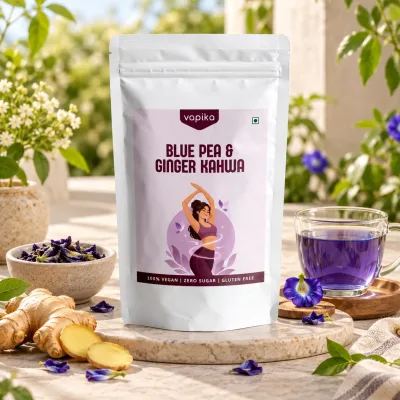
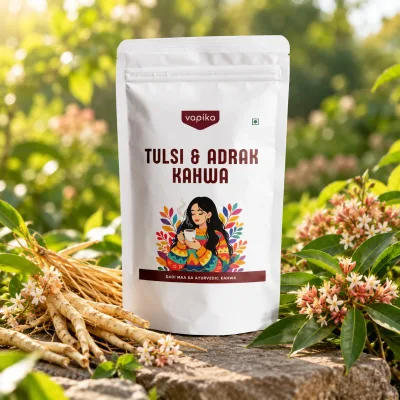
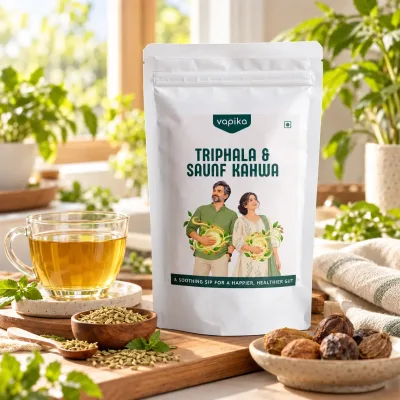
From the texts: Bhāvaprakāśa Nighaṇṭu, Harītakyādi varga (yavānī).
For learning, not diagnosis. If you are pregnant, nursing or on medication, please speak to your doctor first.