
Star anise
The eight-pointed star of a Chinese evergreen, dried hard and brown. It tastes sweet and liquorice-like, and one star perfumes a whole pot.
How Ayurveda reads star anise
- Part used
- Fruit, dried
Reviewed by the Vapika team.
In the tradition
Star anise isn't an Ayurvedic herb. It grows in southern China and Vietnam, and came to India by trade. The Unani name, bādiyān-e-khatāʼī, "Chinese anise", gives its origin away. Today it is part of Indian garam masala and biryani spice.
A different tree, Japanese star anise (Illicium anisatum), has a nearly identical fruit that is poisonous. Good suppliers test for it.
How we read it
Because the classical texts don't describe star anise, this page gives it no rasa, guṇa or vīrya. By taste, it is sweet and pungent.
In the Indian kitchen
A star in the ghee for biryani and pulao, in garam masala, in Chettinad masalas, and in some chai masalas.
How we use it
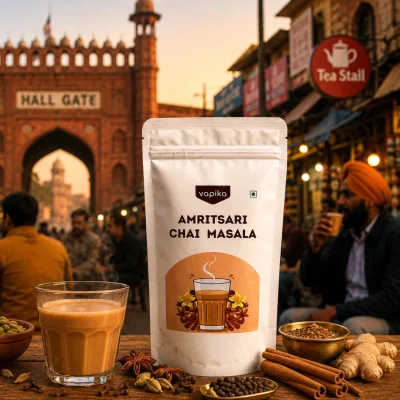
We use whole star anise in our Amritsari Chai Masala, for its sweet, liquorice-like note.
Star anise in our blends
From the texts: Not described in the classical Ayurvedic texts. Used in Unani medicine as bādiyān-e-khatāʼī.
For learning, not diagnosis. If you are pregnant, nursing or on medication, please speak to your doctor first.