
Spearmint
The pudina of every Indian kitchen: in chutney, raita and chaas, and on top of the biryani. Sweeter and softer than peppermint, it makes a gentle, fresh cup.
- Settles Kapha
- Settles Vata
- Can raise Pitta
How Ayurveda reads spearmint
- Rasa · taste
- Pungent (kaṭu)
- Guṇa · nature
- Light, dry (laghu, rūkṣa)
- Vīrya · potency
- Heating (uṣṇa)
- Vipāka · after digestion
- Pungent (kaṭu)
- Part used
- Leaf
Reviewed by the Vapika team.
In the tradition
Mint does not appear in Caraka or Suśruta. It enters Ayurvedic writing late, under its everyday name pudīnā, and is described in the later nighaṇṭus (herbal lexicons). In the home, it has been a kitchen herb far longer than a medicinal one.
How Ayurveda reads it
Pudina is read as pungent, light and dry, and heating in potency, even though it feels cool on the tongue. The cool feeling is the menthol; the classical reading is of its action after it is taken. It is described as settling Kapha and Vata, and able to raise Pitta in quantity.
In the Indian kitchen
Pudina chutney with every snack, mint raita with biryani, crushed leaves in chaas and jaljeera, and a few leaves in the summer nimbu pani. Dried pudina is crumbled into curd and dals when fresh is out of season.
How we use it
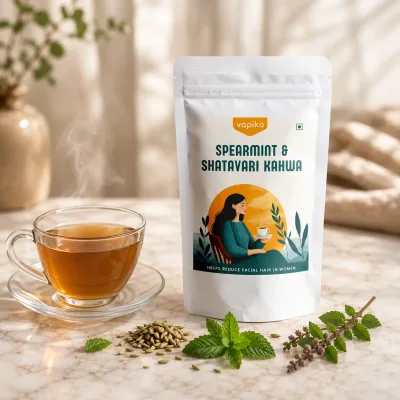
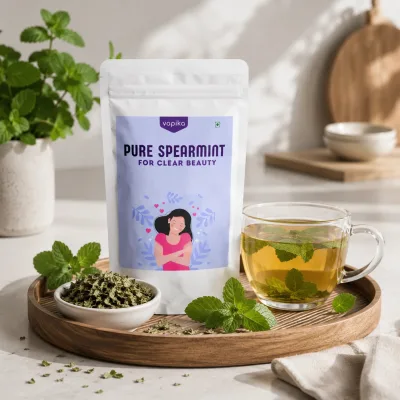
We use dried spearmint leaf, both on its own and as the lead herb in our Spearmint & Shatavari Kahwa. Where a pack says simply "mint", it is spearmint. It needs only a short simmer; long boiling dulls it.
From the texts: Mint is a late arrival in the Ayurvedic materia medica; it is described in later nighaṇṭus rather than the Bṛhattrayī.
For learning, not diagnosis. If you are pregnant, nursing or on medication, please speak to your doctor first.