
Shatavari
The cluster of pale, finger-like roots of a wild asparagus. Sweet, cooling and nourishing, shatavari is the herb Ayurveda has long kept for women.
- Settles Vata
- Settles Pitta
- Can raise Kapha
How Ayurveda reads shatavari
- Rasa · taste
- Sweet, bitter (madhura, tikta)
- Guṇa · nature
- Heavy, unctuous (guru, snigdha)
- Vīrya · potency
- Cooling (śīta)
- Vipāka · after digestion
- Sweet (madhura)
- Part used
- Tuberous root
Reviewed by the Vapika team.
In the tradition
Śatāvarī is usually read as "she who has a hundred roots", for the bunch of tuberous roots below each plant. Her other names, Nārāyaṇī and Bahusutā, "mother of many", show the place she has held in the care of women. It grows wild across India, climbing through scrub on fine, needle -like stems.
How Ayurveda reads it
Shatavari is sweet and bitter, heavy and unctuous, and cooling. Those are the qualities of nourishment, and the texts describe it as rasāyana (renewing) and balya (giving strength), settling Vata and Pitta. Because it is heavy and sweet, it can raise Kapha.
In the Indian kitchen
Shatavari is not a kitchen herb, though the young shoots of the plant are cooked as a vegetable in some villages. The root is taken powdered, most often in warm milk with a little ghee or sugar.
How we use it
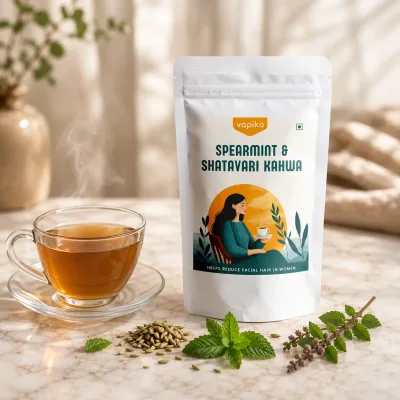
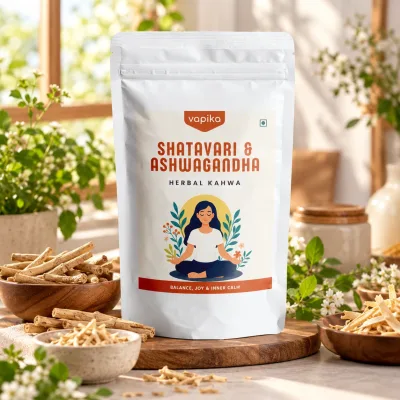
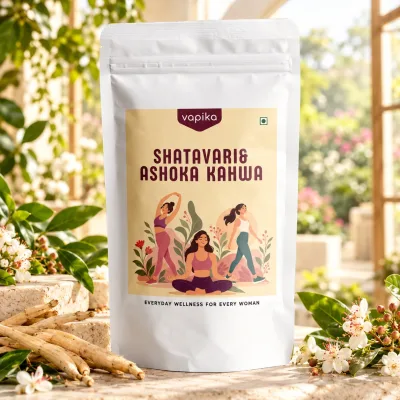
We use the dried, cut root in our Shatavari & Ashoka, Shatavari & Ashwagandha and Spearmint & Shatavari kahwas. It brings sweetness and body to the cup, and pairs naturally with warming roots like ashwagandha.
From the texts: Caraka Saṃhitā, Sūtrasthāna 4 (among the madhura skandha herbs); Bhāvaprakāśa Nighaṇṭu, Guḍūcyādi varga.
For learning, not diagnosis. If you are pregnant, nursing or on medication, please speak to your doctor first.