
Saffron
The red threads of the autumn crocus, each flower giving only three. Kesar colours a cup gold and gives it a honeyed, hay-like scent.
- Settles Vata
- Settles Pitta
- Settles Kapha
How Ayurveda reads saffron
- Rasa · taste
- Pungent, bitter (kaṭu, tikta)
- Guṇa · nature
- Unctuous (snigdha)
- Vīrya · potency
- Heating (uṣṇa)
- Vipāka · after digestion
- Pungent (kaṭu)
- Part used
- Stigma, dried
Reviewed by the Vapika team.
In the tradition
Saffron has been grown on the karewa plateaus of Pampore, near Srinagar, for centuries, and one of its Sanskrit names, Kāśmīraja, means "born in Kashmir". The flowers bloom for a few weeks in late October and are picked by hand at dawn. It takes well over a hundred thousand flowers to make a kilo of saffron, which is why it costs what it does.
Kashmir saffron carries a GI tag.
How Ayurveda reads it
Kumkuma is pungent and bitter, unctuous, and heating. It is described as settling all three doshas, and as varṇya, good for the complexion.
In the Indian kitchen
A few strands soaked in warm milk for biryani, kheer, shrikhand, kulfi, phirni and Kashmiri kahwa. Kesar milk at festivals. Saffron is always used in small amounts.
How we use it
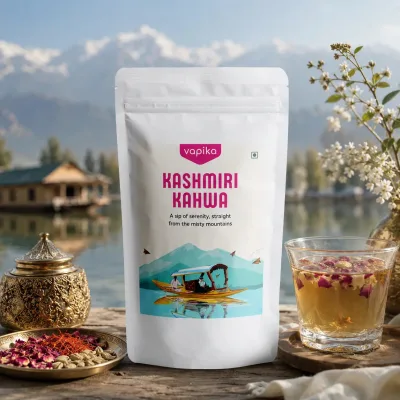
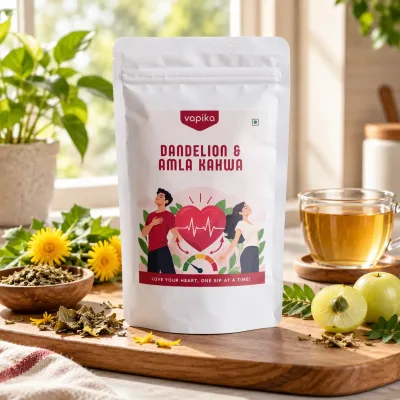
We use a few saffron strands in our Kashmiri Kahwa and Dandelion & Mulethi Kahwa, for colour and scent.
Saffron in our blends
From the texts: Bhāvaprakāśa Nighaṇṭu, Karpūrādi varga (kuṅkuma).
For learning, not diagnosis. If you are pregnant, nursing or on medication, please speak to your doctor first.