
Rose
Dried petals of the desi gulab, the scent of gulkand, gulab jal and every wedding. In a cup, rose is soft, sweet and cooling.
- Settles Pitta
- Settles Vata
- Settles Kapha
How Ayurveda reads rose
- Rasa · taste
- Sweet, bitter, astringent (madhura, tikta, kaṣāya)
- Guṇa · nature
- Light, unctuous (laghu, snigdha)
- Vīrya · potency
- Cooling (śīta)
- Vipāka · after digestion
- Sweet (madhura)
- Part used
- Petal
Reviewed by the Vapika team.
In the tradition
The fragrant pink rose of India, śatapatrī, "the hundred-petalled", came into wide cultivation under the Mughals, though roses were known in India long before. Kannauj in Uttar Pradesh has distilled rose into gulab jal and ittar for centuries, and the rose fields of Pushkar and Hasanpur still bloom for it.
How Ayurveda reads it
Rose is sweet, bitter and astringent, light and slightly unctuous, and cooling. It is described as settling all three doshas, above all Pitta, and as hṛdya, pleasing to the heart and mind.
In the Indian kitchen
Gulkand, rose petals layered with sugar and ripened in the sun, eaten by the spoon in summer and pressed into paan. Gulab jal in kheer, lassi, falooda and biryani. Rose sharbat, and dried petals over sweets.
How we use it
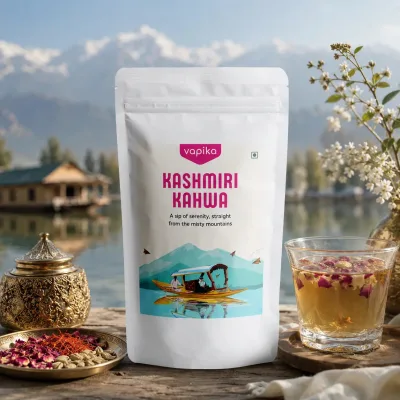
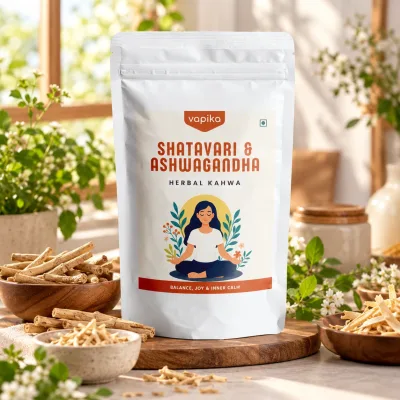
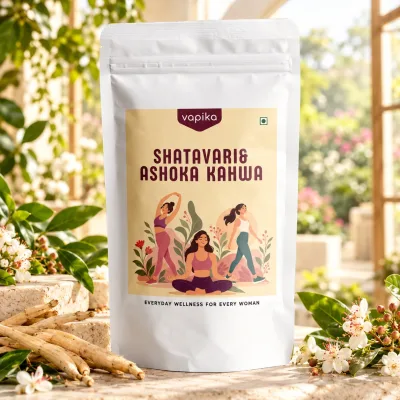
We use dried, food-grade rose petals in Kashmiri Kahwa, Desi Tea – Garm Jal and our Shatavari blends. They soften the cup and give it a gentle scent.

From the texts: Bhāvaprakāśa Nighaṇṭu, Puṣpa varga (śatapatrī).
For learning, not diagnosis. If you are pregnant, nursing or on medication, please speak to your doctor first.