
Lodhra
The bark of a small tree of the eastern and central Indian hills. Astringent and mild, lodhra is one of the classical barks kept for women.
- Settles Kapha
- Settles Pitta
- Can raise Vata
How Ayurveda reads lodhra
- Rasa · taste
- Astringent (kaṣāya)
- Guṇa · nature
- Light, dry (laghu, rūkṣa)
- Vīrya · potency
- Cooling (śīta)
- Vipāka · after digestion
- Pungent (kaṭu)
- Part used
- Bark
Reviewed by the Vapika team.
In the tradition
Lodhra appears all through classical Sanskrit, not only in medicine. Kālidāsa writes of women dusting their faces with lodhra pollen, and of its flowers in the cold season. Its bark was also a mordant for dyeing cloth.
How Ayurveda reads it
Lodhra is astringent, light and dry, and cooling. It is described as settling Kapha and Pitta, and as grāhī, binding. Caraka lists it in two of his great groups.
In the Indian kitchen
Lodhra is not a kitchen herb. Its bark is used in decoctions, in powders, and as a face pack.
How we use it
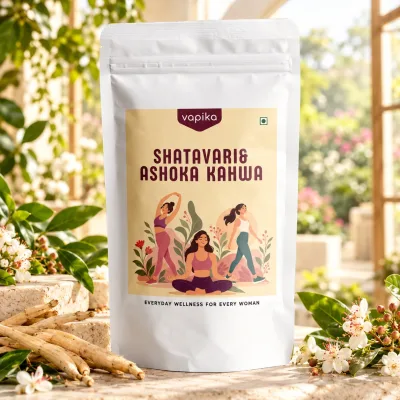
We use the dried bark in our Shatavari & Ashoka Kahwa, for an astringent, woody base.
Lodhra in our blends
From the texts: Caraka Saṃhitā, Sūtrasthāna 4 (among the śoṇitasthāpana and purīṣasaṅgrahaṇīya groups); Bhāvaprakāśa Nighaṇṭu, Vaṭādi varga.
For learning, not diagnosis. If you are pregnant, nursing or on medication, please speak to your doctor first.