
Kalonji
The small, matt-black, triangular seed on top of naan and in the panch phoron of Bengal. Oniony, peppery and a little smoky.
- Settles Kapha
- Settles Vata
- Can raise Pitta
How Ayurveda reads kalonji
- Rasa · taste
- Pungent, bitter (kaṭu, tikta)
- Guṇa · nature
- Light, dry, sharp (laghu, rūkṣa, tīkṣṇa)
- Vīrya · potency
- Heating (uṣṇa)
- Vipāka · after digestion
- Pungent (kaṭu)
- Part used
- Seed
Reviewed by the Vapika team.
In the tradition
Kalonji goes by many names, and they get mixed up. In Hindi it is kalonji or mangrela. In English it is nigella, black seed, or, confusingly, "black cumin". The texts list upakuñcikā with the cumins, and many scholars identify it as nigella. It is a different plant from shahi jeera (Bunium persicum), which is also sold as black cumin.
How Ayurveda reads it
Kalonji is pungent and bitter, light, dry and sharp, and heating. Like the cumins, it is described as kindling agni, the digestive fire, and settling Kapha and Vata.
In the Indian kitchen
Kalonji is one of the five seeds of Bengali panch phoron. It is scattered on naan and kulcha, cracked into pickles (above all mango and lime), and fried in mustard oil for vegetables.
How we use it
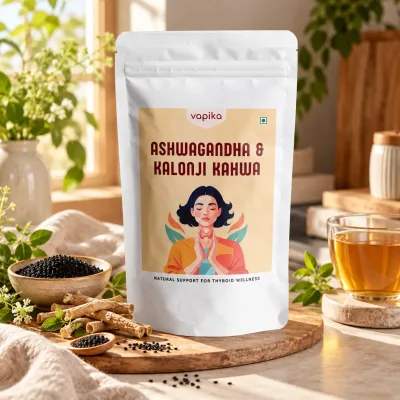
We use whole kalonji seed in our Ashwagandha & Trikatu Kahwa, where it brings a savoury, peppery depth to the earthy roots.
Kalonji in our blends
From the texts: Bhāvaprakāśa Nighaṇṭu, Harītakyādi varga (upakuñcikā, among the jīraka).
For learning, not diagnosis. If you are pregnant, nursing or on medication, please speak to your doctor first.