
Gurmar
The leaf of a forest climber whose Hindi name means "sugar destroyer". Chew one, and for a while afterwards sugar tastes of almost nothing.
- Settles Kapha
- Settles Vata
How Ayurveda reads gurmar
- Rasa · taste
- Astringent, bitter (kaṣāya, tikta)
- Guṇa · nature
- Light, dry (laghu, rūkṣa)
- Vīrya · potency
- Heating (uṣṇa)
- Vipāka · after digestion
- Pungent (kaṭu)
- Part used
- Leaf
Reviewed by the Vapika team.
In the tradition
Guḍ-mār, "sugar killer", and madhunāśinī, "destroyer of sweetness": both names describe what the leaf does on the tongue. Chew a fresh leaf and, for some minutes, sugar loses its sweetness. The Sanskrit meṣaśṛṅgī, "ram's horn", is for its curved, paired seed pods.
How Ayurveda reads it
Gurmar is astringent and bitter, light and dry, and heating. It is described as settling Kapha and Vata.
In the Indian kitchen
Gurmar isn't used in cooking. In the forests of central and south India where it grows, the leaves are chewed fresh.
How we use it
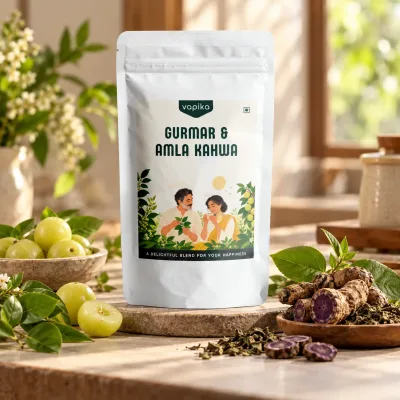
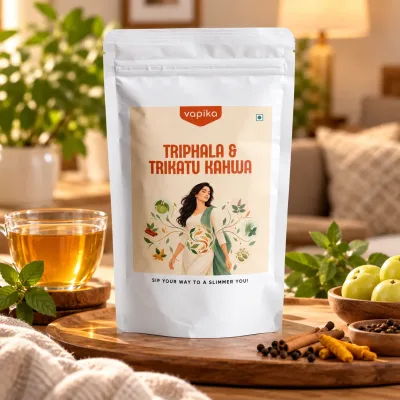
We use dried gurmar leaf in our Gurmar & Amla and Garcinia & Trikatu kahwas. It adds a clean bitterness.
Gurmar in our blends
From the texts: Bhāvaprakāśa Nighaṇṭu, Guḍūcyādi varga (meṣaśṛṅgī).
For learning, not diagnosis. If you are pregnant, nursing or on medication, please speak to your doctor first.