
Bay leaf
The long, three-veined leaf of a Himalayan cinnamon tree, not the European bay laurel. Tejpatta smells of clove and cinnamon and is the first thing into the ghee for pulao.
- Settles Kapha
- Settles Vata
- Can raise Pitta
How Ayurveda reads bay leaf
- Rasa · taste
- Pungent, sweet (kaṭu, madhura)
- Guṇa · nature
- Light, sharp, slimy (laghu, tīkṣṇa, picchila)
- Vīrya · potency
- Heating (uṣṇa)
- Vipāka · after digestion
- Pungent (kaṭu)
- Part used
- Leaf
Reviewed by the Vapika team.
In the tradition
Indian bay leaf comes from a cousin of the cinnamon tree that grows in the Himalayan foothills, from Himachal to the north-east. It is a different plant from the Mediterranean bay laurel, and tastes different: warmer, sweeter, more like cinnamon and clove.
The texts list patraka as one of the three aromatics of trijātaka, with cinnamon and cardamom.
How Ayurveda reads it
Tejpatta is pungent and slightly sweet, light and sharp, and heating. It is described as settling Kapha and Vata.
In the Indian kitchen
A leaf or two in the hot ghee for pulao, biryani, rajma, chole and garam-masala curries, taken out before serving. Ground, it goes into some garam masalas and the Bengali garam masala of cinnamon, cardamom and clove.
How we use it
We use dried tejpatta leaf, cut, in our Tulsi & Adrak and Gurmar & Amla blends, as a soft, spiced background note.
Bay leaf in our blends
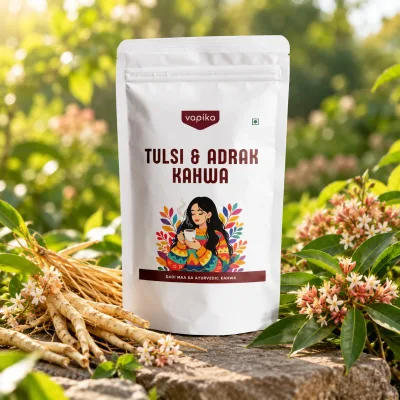
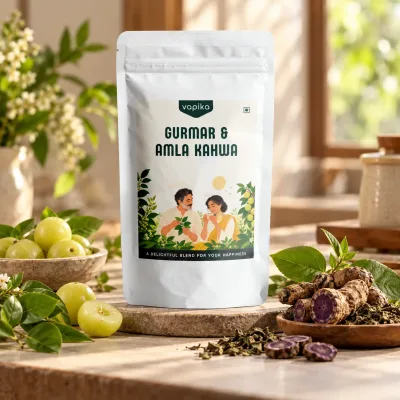
From the texts: Bhāvaprakāśa Nighaṇṭu, Karpūrādi varga (tejapatra / patraka).
For learning, not diagnosis. If you are pregnant, nursing or on medication, please speak to your doctor first.