
Ashoka
The bark of a small temple tree with clusters of orange-red flowers. Its name means "without sorrow", and it is one of the best-known barks in Ayurveda.
- Settles Kapha
- Settles Pitta
- Can raise Vata
How Ayurveda reads ashoka
- Rasa · taste
- Astringent, bitter (kaṣāya, tikta)
- Guṇa · nature
- Light, dry (laghu, rūkṣa)
- Vīrya · potency
- Cooling (śīta)
- Vipāka · after digestion
- Pungent (kaṭu)
- Part used
- Bark
Reviewed by the Vapika team.
In the tradition
A-śoka, "without sorrow". The Buddha is said to have been born under an ashoka tree in Lumbini, and Sita waited in Ravana's garden of ashoka trees, the Aśokavāṭikā. The tree flowers in spring, in dense clusters of orange turning red.
It is not the tall, narrow "ashoka" planted along Indian roads. That is Polyalthia longifolia, the false ashoka, and its bark is often sold in place of the true one.
How Ayurveda reads it
Ashoka is astringent and bitter, light and dry, and cooling. It is described as settling Kapha and Pitta, and has long been a herb kept for women.
In the Indian kitchen
Ashoka is not a kitchen herb. The bark is taken as a decoction, or as the fermented aśokāriṣṭa.
How we use it
We use dried ashoka bark in our Shatavari & Ashoka and Spearmint & Shatavari kahwas, where it gives an astringent, woody base.
Ashoka in our blends
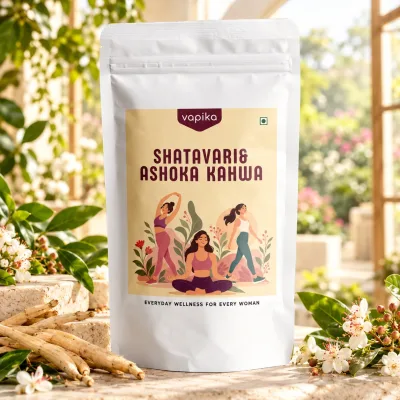
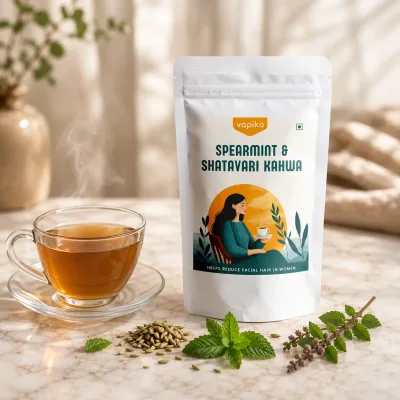
From the texts: Caraka Saṃhitā, Sūtrasthāna 4 (vedanāsthāpana); Bhāvaprakāśa Nighaṇṭu, Vaṭādi varga.
For learning, not diagnosis. If you are pregnant, nursing or on medication, please speak to your doctor first.